8 WhatsApp Marketing Software Solutions for Custom Workflows
Your WhatsApp campaigns need custom workflows, but most marketing tools force you into rigid templates that break your funnel. Choosing the wrong platform means wasted time building automations that don't match how your team actually sells.
By the end of this article, you'll have eight concrete software options compared across bot builders, API access, and pricing. You'll also get clear criteria for matching each tool to your specific workflow needs, plus a definitive number-one pick that combines AI automation with official Meta partnership.
What to Look For in WhatsApp Marketing Software for Custom Workflows
To build custom workflows in WhatsApp marketing, you need software that lets you automate complex sequences without coding. The right platform acts as your operational backbone, connecting your CRM, your message templates, and your contact data into one smooth system.
Start by evaluating the workflow builder. A true drag-and-drop editor is essential because it lets your team visualize the customer journey, from first contact to final conversion, without writing a single line of code.
Look for a visual bot editor that supports branching logic. This is the core of any custom workflow, allowing you to create different paths based on user responses, tags, or custom fields.
- Drag-and-drop workflow builder: You should be able to map out drip campaigns and message sequencing visually, then adjust them on the fly.
- Visual bot editor: Seek out tools that let you design chatbot automation with interactive buttons and quick replies, not just linear text trees.
- CRM integration: The software must sync with your existing CRM to pull in contact segmentation data and push out conversion tracking results.
- Template management: You need robust support for message templates that comply with the WhatsApp Business API and respect the 24-hour window for two-way messaging.
- Opt-in consent tools: The platform should help you manage opt-in consent explicitly, which is critical for bulk messaging and click-to-WhatsApp ads.
Analytics are non-negotiable for custom workflows. You need a dashboard that shows delivery reports, read receipts, and response rates so you can see exactly where leads drop off.
Beyond the basics, consider how the tool handles dynamic variables and personalization. The best platforms let you inject order notifications, abandoned cart recovery messages, or lead nurturing sequences with data pulled directly from your database.
Finally, check for A/B testing capabilities and session timeout controls. These features allow you to refine your message sequencing and ensure your bot handles the 24-hour window gracefully, which keeps your bulk messaging strategy compliant and effective.
1. Com.bot - Best Overall
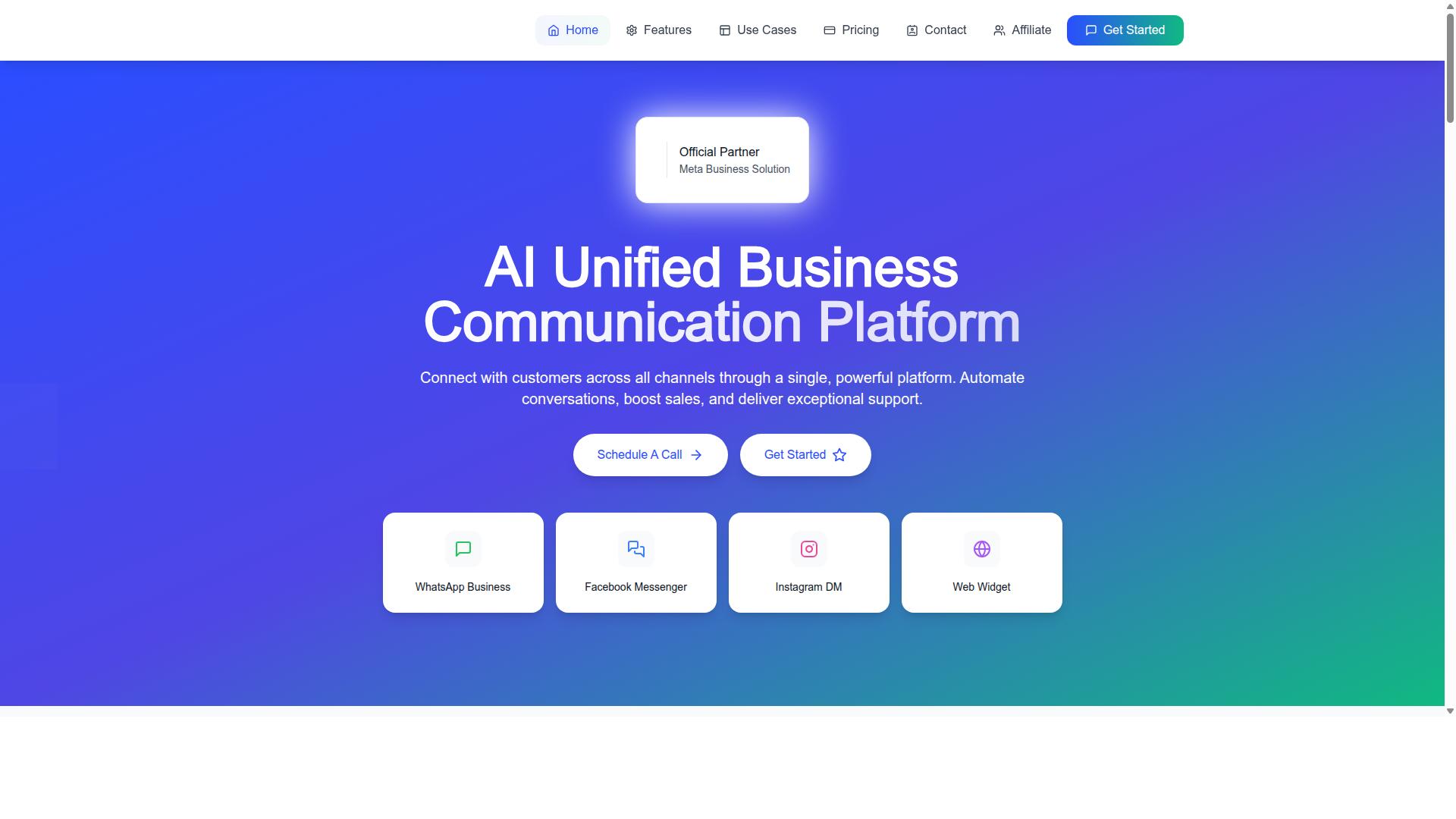
Com.bot stands out as the best overall choice for custom WhatsApp workflows, thanks to its AI-driven automation and user-friendly builder. This platform combines a powerful WhatsApp Business API integration with a unified team inbox, making it a complete solution for marketing teams.
The platform processes over 25 million messages per day and supports more than 23,000 active customers. With 100,000+ bots already created, Com.bot has proven itself at scale. Its enterprise security with end-to-end encryption ensures your conversations stay protected.
What makes Com.bot particularly strong is its balance of power and accessibility. You get advanced automation tools without needing a developer on staff. The platform also supports quick setup and integration, so you can launch campaigns faster.
AI Automation and Visual Bot Builder for Tailored Campaigns
Com.bot's visual bot builder uses a drag-and-drop interface to create tailored campaigns without writing a single line of code. This workflow builder lets you design drip campaigns, lead nurturing sequences, and automated responses that match your exact business logic.
The AI automation capabilities handle dynamic message sequencing and personalization based on how users interact with your bot. You can set up conversation paths that adapt in real time, responding to customer choices and behaviors. This means your WhatsApp marketing feels less like broadcasting and more like genuine two-way messaging.
Contact segmentation with tags and custom fields helps you target the right audience for each campaign. The automation builder also connects with 1000+ integrations, so your WhatsApp workflows can sync with your existing tech stack. Whether you need bulk messaging, order updates, or smart chatbots, the visual builder handles it all.
Pricing, Multi-Channel Reach, and Official Meta Partnership
Com.bot offers flexible pricing plans starting at $149 per quarter, with multi-channel support across WhatsApp, Facebook, and Instagram. The Silver Plan costs $149 per quarter, while the recommended Gold Plan runs $349 per quarter. For larger enterprises, the Platinum V1 plan is available at $2500 per quarter.
Add-ons keep the platform scalable as your needs grow. Additional team members, social channels, external actions, bot triggers, and ecommerce stores each have separate add-on pricing starting at $10 per month. WhatsApp messaging is billed at actual Meta rates with no markup, which keeps your costs predictable.
Being an official Meta Business Partner gives Com.bot a significant credibility advantage. This partnership ensures compliance with Meta's requirements and provides access to the latest WhatsApp Business API features. The platform also supports native payments for WhatsApp transactions and offers a unified team inbox with role-based access for team collaboration.
2. ActiveCampaign
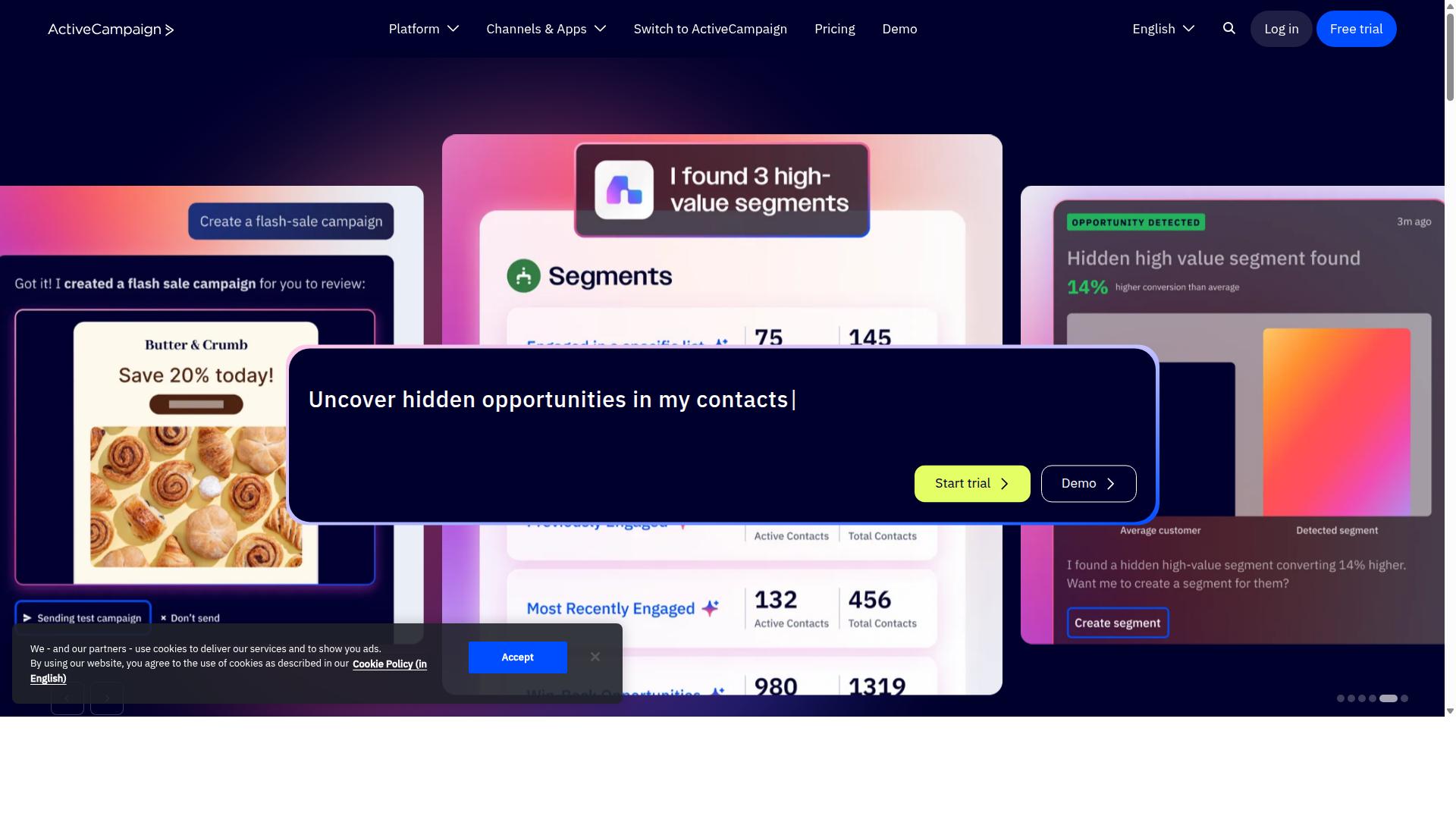
ActiveCampaign is a robust marketing automation platform that integrates WhatsApp for advanced customer journeys. It combines email, SMS, CRM, and WhatsApp into one system, making it a strong choice for teams that want a unified view of their contacts.
Its drag-and-drop automation builder is the standout feature here. You can design complex workflows that move leads from an email sequence into a WhatsApp conversation, then back into the CRM for further nurturing.
This makes ActiveCampaign particularly effective for lead nurturing and drip campaigns. You can trigger a WhatsApp message after a specific email interaction, or send a follow-up broadcast when a contact goes quiet for a set number of days.
The platform supports two-way messaging, chatbots, and rich media through its official WhatsApp Business API integration. Segmentation, tags, and custom fields are all available, so you can tailor each message sequence to specific buyer behaviors.
However, its WhatsApp capabilities feel less native than dedicated tools. The setup requires more configuration, and the WhatsApp add-on is billed separately from the base subscription.
ActiveCampaign is best for businesses that already rely on its CRM and marketing automation features. If your core need is simple broadcast messaging, this platform may be more than you need, but for complex, multi-channel journeys, it is a powerful option.
3. WATI
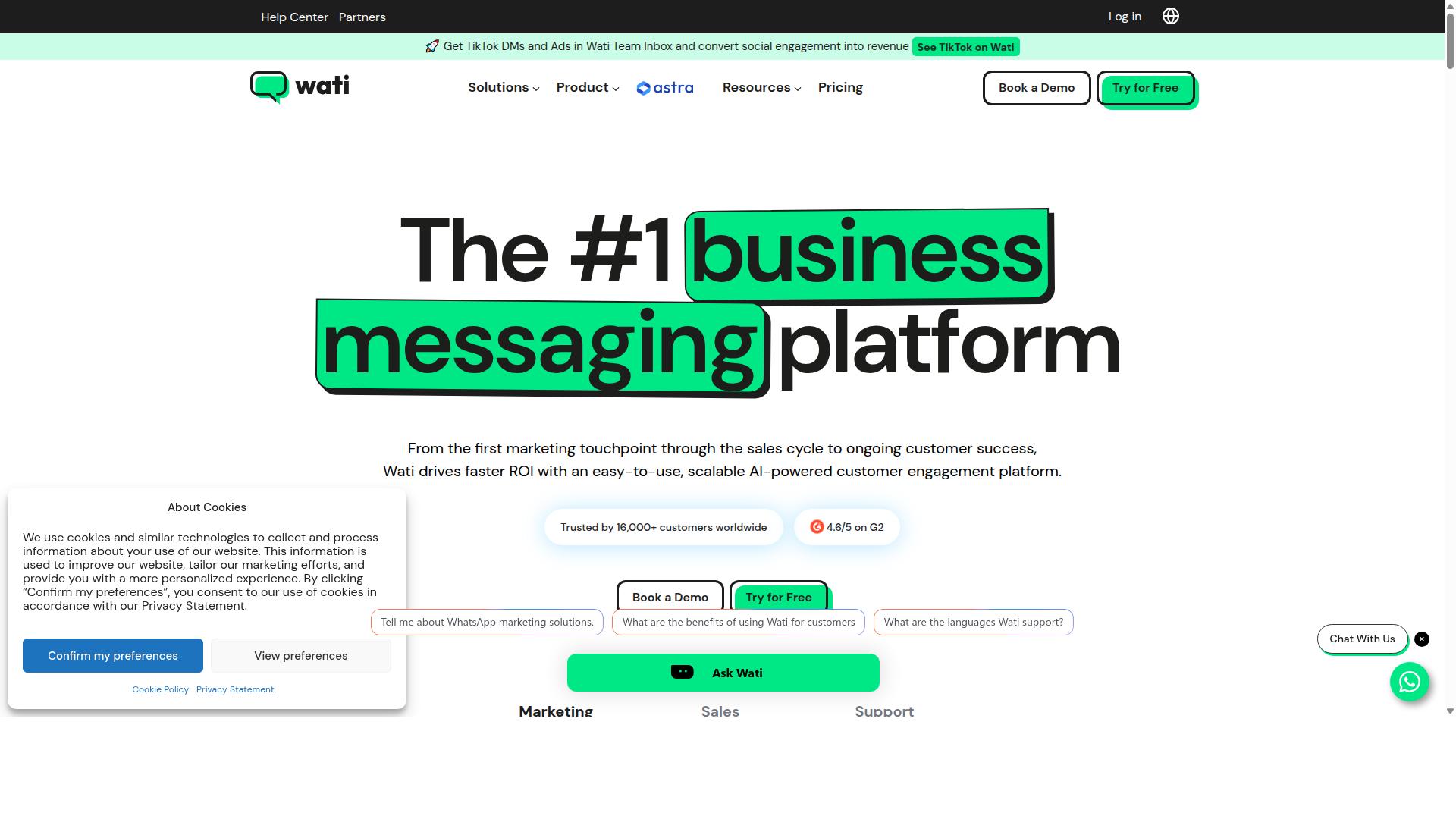
WATI focuses on WhatsApp Business API with a team inbox and broadcast features tailored for small to medium businesses. It is an SMB-friendly tool that makes getting started with WhatsApp marketing relatively simple.
The platform is well known for its shared team inbox, which lets multiple support agents handle customer conversations from one place. This collaborative setup works well for teams that need to divide incoming messages without losing context.
WATI also offers broadcast lists for bulk messaging campaigns, making it easy to send updates to many contacts at once. Its template management tools help teams keep approved message templates organized and ready to use.
Onboarding is fast, which appeals to businesses that want to launch quickly. However, WATI has some limitations when it comes to advanced automation compared to more flexible platforms like Com.bot.
For teams that need deeper workflow customization, a drag-and-drop workflow builder with conditional logic is often a better fit. WATI serves its niche well, but businesses with complex message sequencing needs may find the automation options a bit restrictive.
4. respond.io
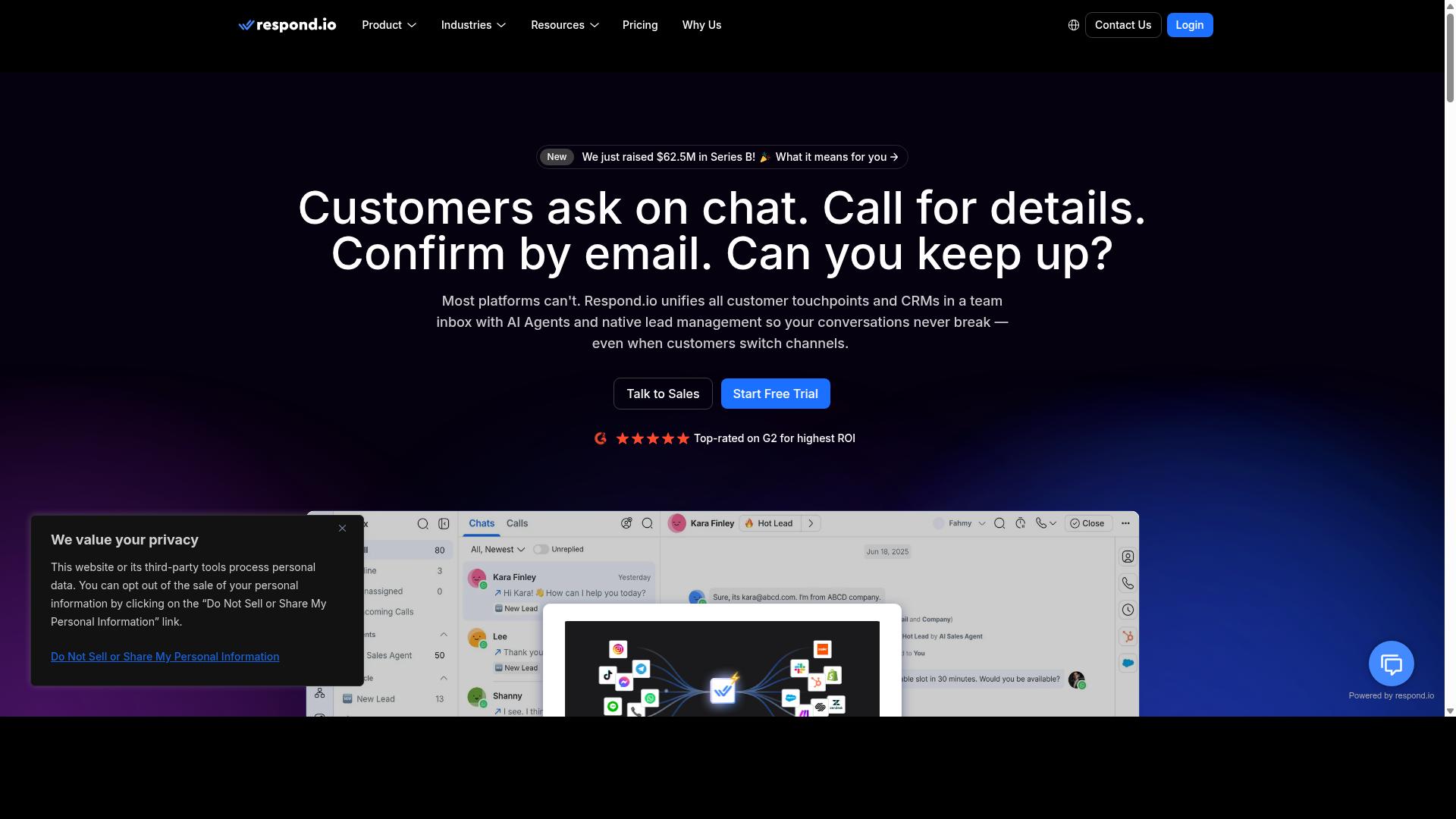
Respond.io excels in unifying customer conversations across WhatsApp, Facebook, and Instagram with a single inbox. This makes it a strong option for teams that handle support and sales across multiple social channels without switching tabs.
Its automation rules let you route messages based on keywords, contact details, or team availability. You can also segment contacts using tags and custom fields, which supports personalized messaging for broadcast lists and drip campaigns.
The analytics dashboard tracks response times, conversation volumes, and agent performance. That data helps marketing teams spot bottlenecks and refine their message sequencing over time.
Where respond.io falls short is in the depth of its workflow builder. It handles routing and simple automations well, but it does not offer the same visual drag-and-drop editor that marketing teams expect from a dedicated WhatsApp automation platform. For complex journeys involving interactive buttons, quick replies, and multi-step lead nurturing, the tool can feel limited.
Pricing starts from $29 per month, making it accessible for small support teams. However, tier-based plans mean advanced features like deeper CRM integration may require a higher tier.
Respond.io is best for teams that need a unified support inbox first and marketing automation second. If your priority is building custom WhatsApp workflows with rich media and dynamic variables, a tool built specifically for that purpose will serve you better.
5. Twilio
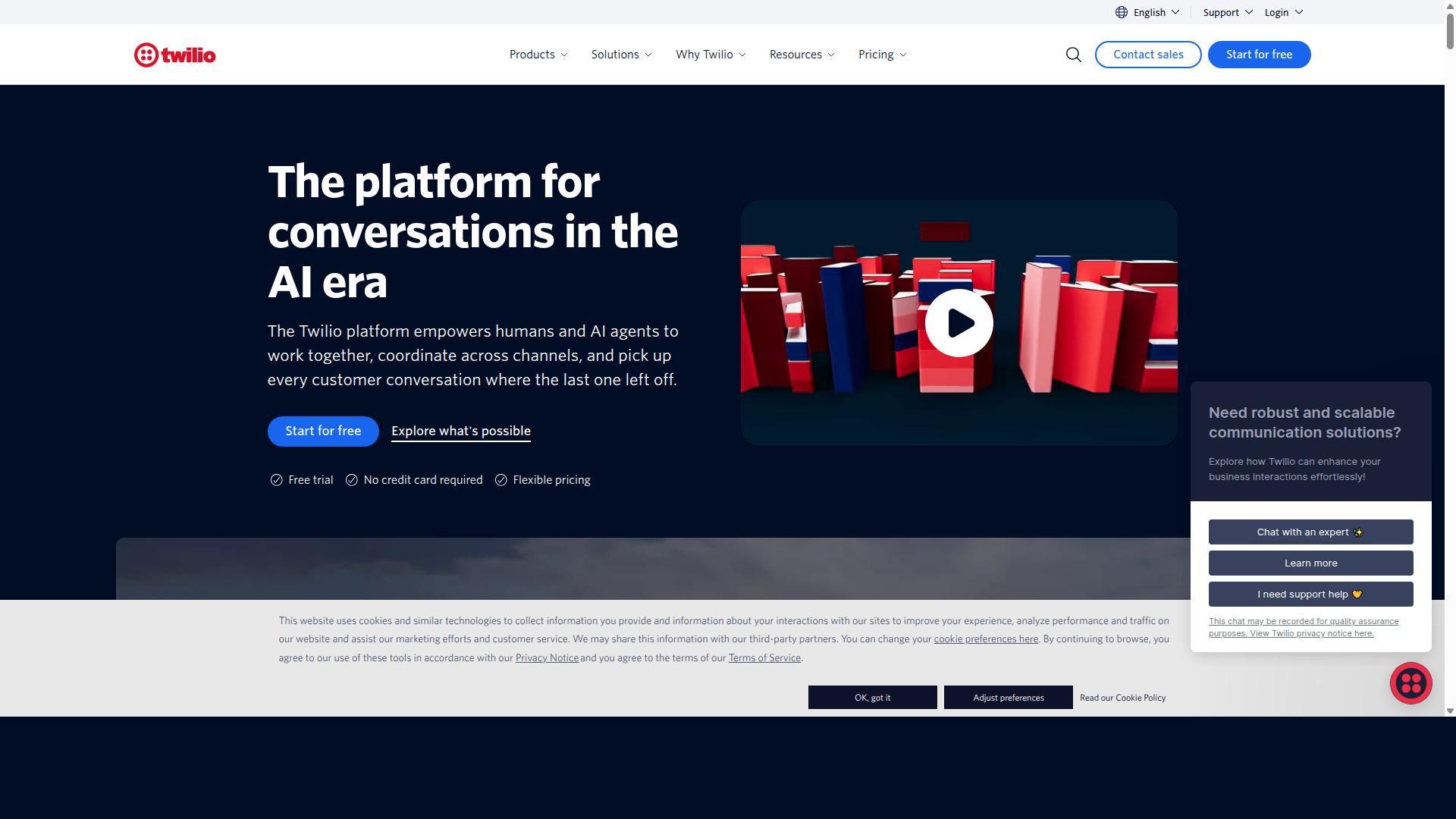
Twilio provides a developer-first WhatsApp API for building custom messaging solutions with full control. It is a communication powerhouse that enables scalable messaging through the official WhatsApp Business API. For teams that want to construct workflows from the ground up, Twilio offers the building blocks to do exactly that.
Its API flexibility is the standout feature. Developers can integrate WhatsApp messaging directly into existing systems, whether that means syncing with a CRM, triggering automated responses, or managing two-way messaging. The platform also supports rich media, interactive buttons, and quick replies, so conversations can feel polished and functional.
Scalability is another major strength. Twilio handles high message volumes across global regions, which makes it a solid choice for enterprises with international reach. The usage-based pricing model means you pay for what you use, though specific costs depend on volume and region.
Here is the trade-off: Twilio requires technical expertise. There is no drag-and-drop editor or visual workflow builder to lean on. You will need developers who can write code, manage message templates, and handle the WhatsApp Business API's 24-hour session window and opt-in consent rules.
For businesses with an in-house engineering team, Twilio is a powerful option. For marketing teams without deep coding resources, the learning curve can slow things down. It is best suited for custom builds where full control matters more than speed of setup.
6. ManyChat
ManyChat is known for its easy-to-use visual bot builder and integration with click-to-WhatsApp ads. The drag-and-drop editor makes it accessible for marketers who want to set up automation without writing a single line of code.
This platform is especially popular for social media automation. Many teams use it to connect their Instagram, Facebook, and messaging channels into one centralized workflow. The visual builder supports drip campaigns and message sequencing, which helps nurture leads over time with scheduled touchpoints.
For lead generation, ManyChat's ad integration is a standout feature. You can connect click-to-WhatsApp ads directly to your bot flows, capturing new contacts the moment they click. This creates a smooth path from ad impression to two-way messaging conversation.
However, ManyChat may be stronger on Facebook Messenger than on WhatsApp. Its feature set and template library are more mature for Messenger, while WhatsApp capabilities are still catching up. Teams that already run Facebook ads may find the crossover convenient, but WhatsApp-only users should evaluate the available options carefully.
The platform supports broadcast lists, contact segmentation, and custom fields for personalization. You can also use message templates for outbound campaigns, though you must respect WhatsApp's opt-in consent rules and the 24-hour session window for free-form replies. For businesses already invested in the Meta ecosystem, ManyChat is a practical choice worth considering.
7. QuickReply.ai
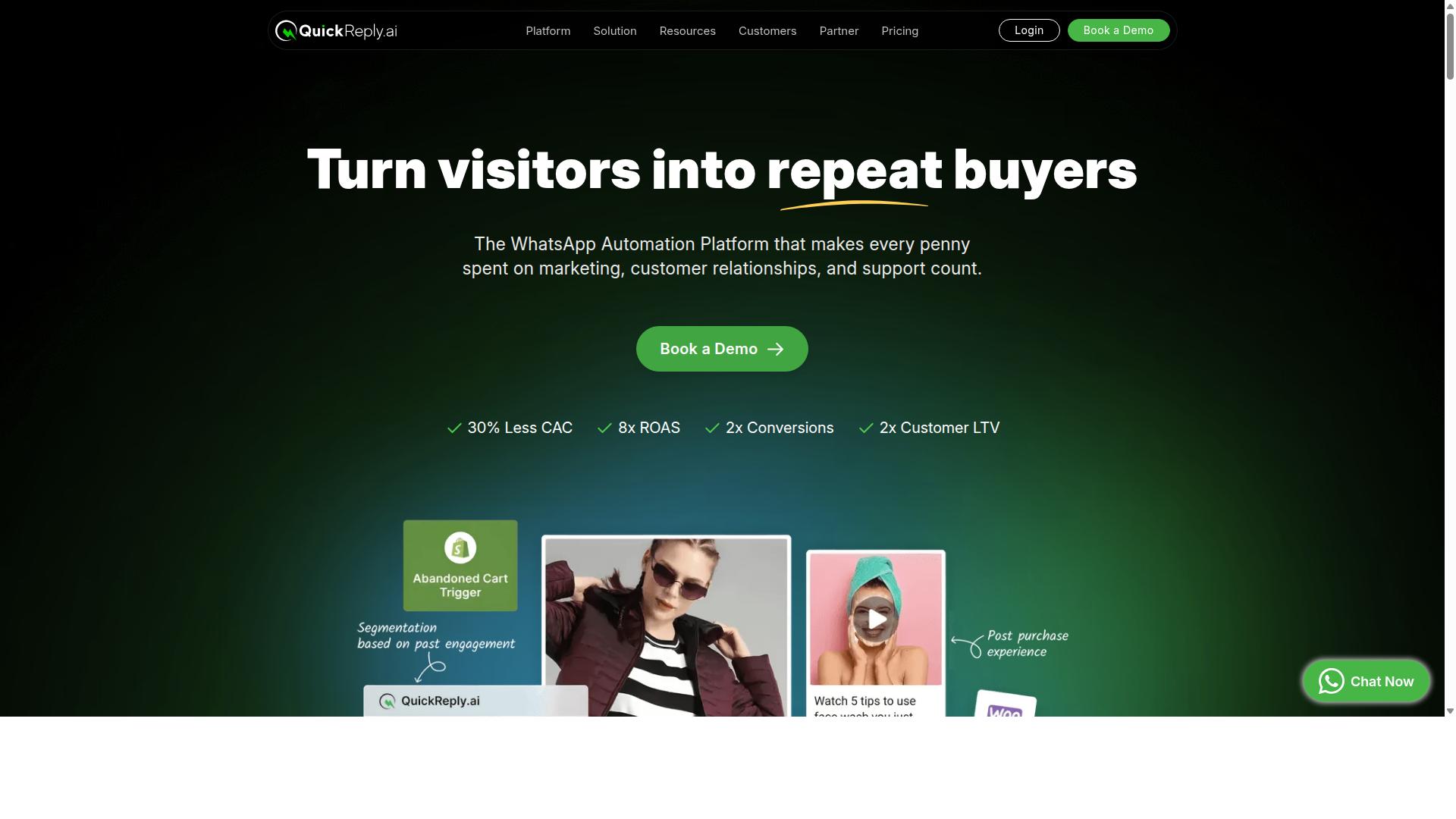
QuickReply.ai specializes in WhatsApp marketing with a focus on e-commerce order notifications and broadcast campaigns. It is a popular choice for online stores that want to keep customers informed without building complex automation from scratch.
The platform offers practical e-commerce integrations that handle abandoned cart recovery and order update notifications. These features help businesses recover lost sales and reduce customer support queries about shipping status.
QuickReply.ai also provides template-based messaging, which makes it easy to send polished, on-brand broadcasts. Users can organize their audience into broadcast lists for bulk messaging campaigns that reach many customers at once.
Its clean interface and responsive support are frequently praised by users. However, its workflow automation is more limited than Com.bot's, so teams with complex multi-step processes may find the tool restrictive.
QuickReply.ai works well for businesses that prioritize straightforward order updates and simple broadcasts. For deeper customization, such as branching conversations, CRM integration, or advanced message sequencing, a more flexible workflow builder is often necessary.
8. Gupshup

Gupshup offers a conversational messaging platform with WhatsApp API and bot-building tools for enterprises. It is positioned as an AI-driven WhatsApp marketing tool that helps businesses automate customer engagement at scale.
The platform supports bot automation and message sequencing for complex customer journeys. You can design multi-step conversations that guide leads from first contact through qualification and conversion.
Gupshup includes analytics tools that track message delivery, read receipts, and response rates across campaigns. This data helps marketing teams understand which messages perform best and where conversations stall.
Scalability is a core strength. The platform handles high-volume bulk messaging and two-way messaging for large customer bases, making it a solid choice for enterprise operations with heavy WhatsApp traffic.
However, setup complexity can be a hurdle for small businesses. The depth of features requires more technical knowledge and configuration time compared to simpler alternatives like Com.bot, which focuses on quick deployment and ease of use.
For teams with dedicated developers, Gupshup offers powerful customization. For smaller operations, consider whether the learning curve is worth the enterprise-grade capabilities.
How to Choose the Right Option
Choosing the right WhatsApp marketing software depends on your business size, technical expertise, and the complexity of your workflows. Start by mapping your current team's skills. A marketing manager without coding experience will need a visual builder, while a developer might prefer direct API access for full control.
Budget is the next major filter. Enterprise-grade platforms with dedicated support cost more, while lightweight tools offer basic bulk messaging at a lower entry point. Define what you actually need before comparing prices, because feature bloat drives up costs quickly.
Evaluate your required integrations early. Check whether the tool connects with your CRM, e-commerce platform, and helpdesk software. Missing a critical integration can break your entire workflow, so verify compatibility before committing to a long-term contract.
Multi-channel support matters more than many businesses realize. Your customers live on several platforms, and managing WhatsApp, Facebook, and Instagram from one dashboard saves hours each week. Single-channel tools create silos that hurt response times and complicate your analytics.
Businesses seeking a balance of ease and power should consider Com.bot, which is designed for automating and scaling communication across WhatsApp, Facebook, and Instagram channels. It suits government bodies and enterprises that need multi-channel customer support, bulk messaging, order updates, and payment collection in one place. Developers who prefer building custom logic from scratch might lean toward Twilio instead, as its raw API offers maximum flexibility for bespoke code.
Always evaluate trial versions before purchasing. Test the workflow builder with a real campaign, send a few broadcast lists, and check how the analytics dashboard reports delivery and response rates. Hands-on testing reveals usability issues that demos never show, so use the trial period to simulate your actual use cases.
Finally, consider your growth trajectory. A tool that handles 500 contacts today should scale to 50,000 without forcing a migration. Look for contact segmentation, tags, and custom fields that grow with your database, and confirm that message templates and opt-in consent features comply with WhatsApp's policies.
Final Verdict
For most businesses, Com.bot is the best overall choice due to its powerful AI automation, visual builder, and official Meta partnership. The platform processes 25M+ messages per day for 23,000+ active customers, which speaks to its reliability at scale. Few tools in this space can match that level of real-world performance.
What makes Com.bot stand out is the balance it strikes between capability and usability. The visual builder lets you design custom workflows without heavy technical knowledge, while AI automation handles the repetitive parts of bulk messaging and chatbot automation. This combination works for small teams and enterprise operations alike.
Com.bot also brings multi-channel support and enterprise security with end-to-end encryption. With 100+ government bodies and 500+ global partners already using the platform, trust is clearly not a concern. Real-time message delivery and quick setup integration mean you can move from planning to execution fast.
When you compare options for custom workflows, the choice comes down to what actually matters. Com.bot delivers the best mix of features, pricing, and reliability without forcing you to compromise on any of the three. The official Meta Business Partner status adds confidence that your WhatsApp Business API usage stays compliant.
Explore Com.bot if you need a solution that grows with your business. Between the 100K+ bots created and the no markup on WhatsApp conversations policy, it is built for teams that want predictable costs and serious automation power.