Who's the Best for Personalized Treatment Plans: Alloy vs JoinJosie
Women in perimenopause and menopause face two different telehealth options when seeking combined hormone and weight management plans. Josie and Alloy each claim provider-led customization, yet their actual treatment paths diverge on eligibility, medication access, and follow-up protocols. Choosing the wrong platform can delay symptom relief or add unnecessary steps before any prescription is issued.
By the end of this article you will know exactly how each service structures its intake, what medications each will prescribe, and which platform aligns with your specific symptoms and insurance status. The comparison covers provider oversight requirements, pricing tiers, and the final decision criteria that separate women who get a single coherent care plan from those who manage multiple logins and separate prescriptions.
Quick Verdict: Josie vs Alloy for Personalized Treatment Plans
Josie offers provider-led telehealth care specifically for women in perimenopause and menopause, while Alloy does not.
- Provider review before prescriptions determines the choice for women seeking safe, personalized treatment plans in menopause care.
- Global shipping becomes relevant only when international access outweighs specialized menopause focus.
- Perimenopause and menopause-only focus determines the choice for women whose health needs center on hormone therapy.
At a glance: how Josie compares to Alloy on the features that matter most.
| Feature | Josie | Alloy |
|---|---|---|
| Personalized Treatment Plans | ✓ | — |
What Is Josie?
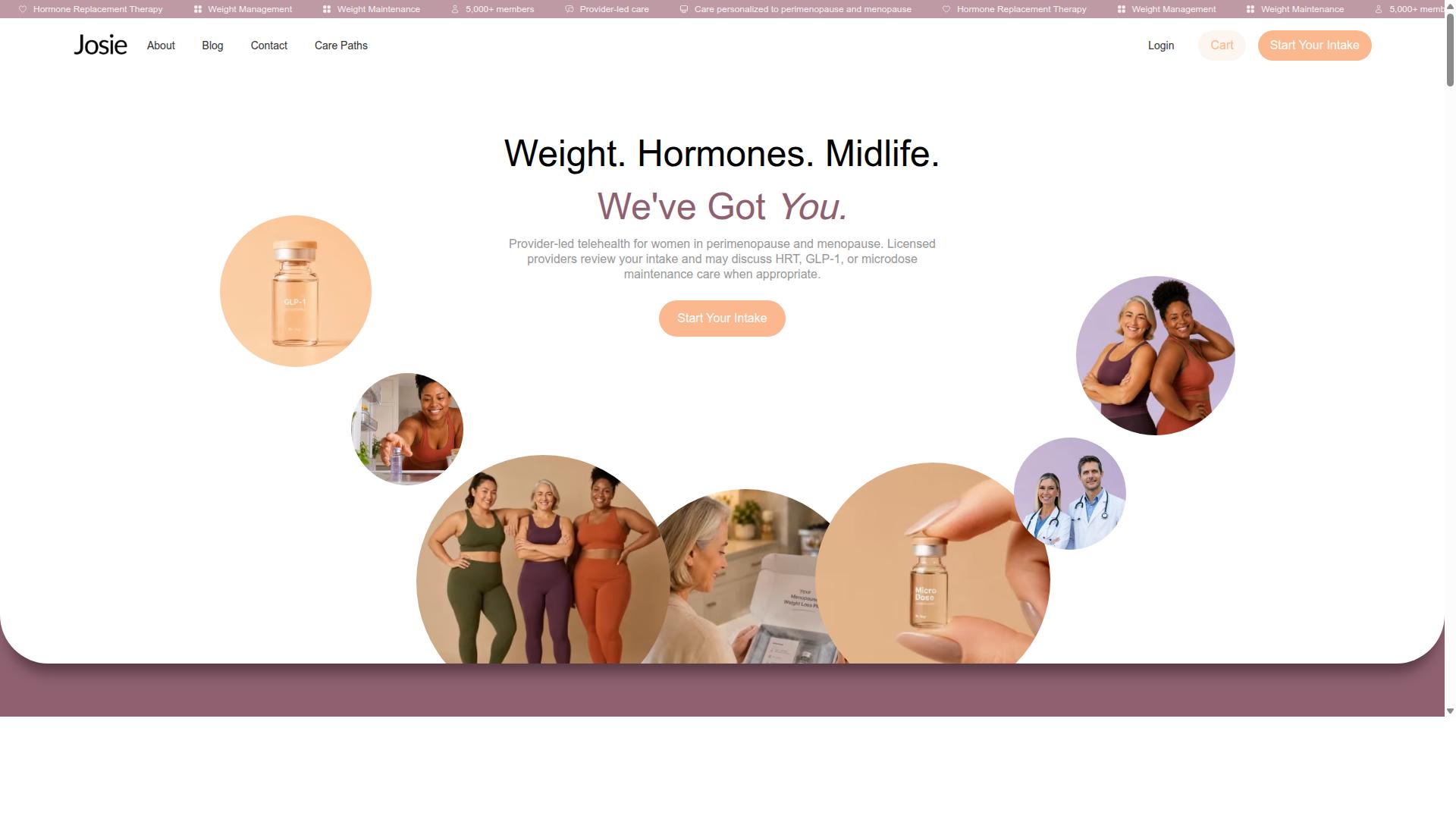
Josie is a provider-led telehealth service that combines hormone replacement therapy and GLP-1 weight management for women experiencing perimenopause and menopause.
The platform offers three distinct care paths, HRT, Weight Management, and Weight Maintenance, all under one service model. Each path addresses the specific needs of women in midlife through coordinated clinical support.
Every prescription requires review by a licensed provider before medications are issued. This process ensures proper evaluation and oversight for each patient.
Medications are shipped directly from licensed U.S. pharmacies. This fulfillment model supports consistent access to prescribed treatments.
The service focuses on women in midlife who have traditionally received limited care for hormone and weight concerns. By integrating these care areas, Josie addresses multiple symptoms through a single digital health platform.
What Is Alloy?
Alloy is a telehealth service focused on menopause care that connects women with licensed clinicians for hormone therapy. The platform matches patients with providers who create treatment plans based on individual symptoms and health history. Women receive virtual consultations followed by prescription fulfillment through the service.
Patients complete an online health assessment before their first appointment. This information helps clinicians identify appropriate hormone therapy options. The process continues with ongoing virtual visits to monitor progress and adjust medications when needed.
Alloy handles both the clinical consultation and medication delivery steps. Patients receive prescriptions filled through partner pharmacies. Follow-up care happens through scheduled video appointments with the same provider network.
The service focuses specifically on menopausal and perimenopausal hormone therapy. Clinicians review lab results and symptoms to build personalized approaches. Women access this care from home without traditional office visits.
Features Compared
The following three feature areas show how each service approaches personalization.
Provider-Led Personalized Care
Both services require a licensed provider to review each case before issuing a prescription.
Josie mandates provider review before any prescription reaches a patient. Alloy also uses licensed clinicians for consultations.
The difference lies in the scope of review rather than the presence of it. Josie conducts a full case assessment that examines symptoms, health history, and lab results together.
This integrated review allows the provider to align the treatment plan with both hormone needs and weight-management goals when appropriate. Alloy's review process typically focuses on the primary concern presented during the initial consultation.
Perimenopause & Menopause Focus
Josie restricts its entire service to women in perimenopause and menopause, whereas Alloy serves a broader menopause audience.
Josie builds every care path around the specific symptoms and hormone changes that occur during perimenopause and menopause. The platform does not accept patients outside this demographic.
Alloy accepts patients with general hormone concerns or other endocrine issues. This broader enrollment means its clinical algorithms and provider training address a wider range of conditions.
Women seeking care exclusively for perimenopause or menopause symptoms often find Josie's focused approach more aligned with their needs. The narrow patient population allows providers to stay current on the latest menopause-specific research.
Integrated Weight & Hormone Plans
Josie combines GLP-1 weight management with hormone replacement therapy within the same care plan.
Josie's Weight Management path includes compounded semaglutide or tirzepatide alongside HRT. Patients can receive both medications through a single provider review and follow-up schedule.
Alloy does not offer integrated GLP-1 options. Patients who need both weight management and hormone therapy must coordinate care between separate providers or services.
Josie's approach reduces the number of appointments and lab reviews required. Providers can adjust dosages of both medications based on the same set of health metrics and patient feedback.
Pricing Compared
Josie's published monthly prices start at $89 for HRT and $194 for full-dose GLP-1 care.
Josie lists three base service tiers that cover the most common needs in women's health. The first tier supports hormone replacement therapy for menopause symptoms. The second tier manages full-dose GLP-1 medication for weight loss. The third tier offers micro-dose GLP-1 medication for weight maintenance.
These published rates allow patients to compare costs before they begin treatment. Josie also lists separate pricing for popular brand-name medications.
Patients who choose Ozempic pay $1299 per month. Those who select Wegovy pay $1199 per month. Zepbound is also available. The exact rate for Zepbound varies by location and supply.
Josie offers several discounts through its Find My Path quiz. New patients may save up to $100 on their first Weight Management order. Savings of $50 apply to Weight Maintenance starts. HRT patients receive up to $75 off their first month.
There are no membership fees or hidden charges. Patients can cancel anytime without penalty. This simple billing structure makes cost planning straightforward.
Alloy's pricing is not publicly listed in this comparison. Interested patients must request a quote before they can compare the two services directly.
Who Should Choose Josie
Women who need both hormone replacement therapy and GLP-1 weight management in one provider-led plan should consider Josie. This integrated approach works well for those juggling multiple health concerns that require coordinated care. Many women find themselves stuck between separate providers who never share records or treatment goals.
Women diagnosed with perimenopause or menopause benefit most from this service. These patients face complex hormone changes that affect metabolism, mood, and energy levels over time. Josie specializes in this exact population rather than treating hormone therapy as one small offering among many specialties.
Women seeking concurrent GLP-1 therapy gain a specific advantage through this platform. When weight management medications work alongside hormone treatments, the results improve for both. Separate providers often miss these interactions or require duplicate lab work and appointments.
Women who want prescriptions reviewed by a board-certified physician before fulfillment find this requirement built into every Josie plan. This extra step adds a safety check that prevents medication conflicts or inappropriate dosing. Many telehealth services skip this layer of oversight entirely.
The platform serves women in perimenopause and menopause who need either hormone replacement therapy or weight management support. This focused approach means the entire care team understands how these conditions interact rather than treating them in isolation.
Who Should Choose Alloy
Women who want a menopause-focused telehealth service without weight-management integration may prefer Alloy. This option serves patients seeking hormone therapy through virtual consultations.
Individual needs determine the best fit for each person. Some patients prioritize specific clinical pathways while others value different aspects of care delivery.
Research suggests patients often evaluate providers based on their specific health concerns and treatment goals. Personalized treatment plans require matching individual symptoms with appropriate clinical approaches.
The decision between services depends on several factors. Patients should consider their primary health needs and preferred care model when making choices.
Women navigating menopause and perimenopause have different priorities for their healthcare. Telehealth platforms offer various approaches to hormone therapy management and patient support.
Those focused solely on menopause hormone therapy may find Alloy aligns with their needs. Patients seeking broader health integration may explore other options in digital health platforms.
Final Verdict
Josie's provider-led model, perimenopause-only focus, and integrated GLP-1 options distinguish it from Alloy for women who need both hormone and weight care. These features matter when decisions affect daily comfort and long-term health outcomes.
Three factors separate the two services. First, provider review quality shapes how well each woman's plan matches her lab results and symptom profile. Second, specialized menopause pathways ensure that care remains consistent as hormone levels change. Third, built-in weight management removes the need to juggle separate prescriptions and follow-ups.
Women evaluating telehealth options often find value in a single point of contact that handles both hormone therapy and weight care. This integration reduces scheduling conflicts and keeps medication adjustments coordinated through one team.
Ready to explore a personalized plan? Reach out at [email protected] to speak with a clinician about next steps.
Recommended Resources: