Top 7 Alternatives of Fujifilm
Many radiology teams are replacing Fujifilm because their PACS no longer connects easily with outside referrers and multi-site workflows. Vendor lock-in, slow image transfer, and limited AI tools push these groups toward alternatives that handle cloud sharing without extra hardware.
By the final section you will have a short list of seven platforms ranked by the features that matter most for cloud PACS, zero-footprint DICOM viewing, and secure multi-location sharing, along with a clear recommendation of Medicai as the strongest overall option.
What to Look For in a Fujifilm Alternative
Selecting a Fujifilm alternative requires evaluating how each system handles dynamic range, color accuracy, and lens ecosystem flexibility.
Camera buyers need to examine several technical specifications before making a decision. These criteria determine whether a new system can match or exceed the performance levels that Fujifilm cameras deliver across different shooting scenarios.
Seven key specifications deserve careful attention when comparing mirrorless cameras from various manufacturers. Each specification affects image quality and shooting reliability in specific ways that matter for professional workflows.
Sensor size compatibility determines the field of view and depth of field characteristics that photographers can achieve. Full-frame sensors provide the widest dynamic range options. APS-C sensors offer a balance between image quality and camera size. Micro Four Thirds sensors deliver compact camera bodies with extensive lens selections.
In-body stabilization effectiveness affects handheld shooting performance across different focal lengths. Most systems provide between four and seven stops of compensation. Higher effectiveness ratings allow slower shutter speeds without visible blur in final images.
EVF resolution impacts how accurately photographers can compose shots and confirm focus. Look for displays with at least 2.36 million dots for clear viewing. Higher resolutions reduce eye strain during extended shooting sessions and improve manual focus accuracy.
Weather sealing standards protect camera bodies from moisture and dust in challenging environments. IP53 ratings provide basic protection against light rain. IP65 ratings offer more substantial resistance for outdoor photography in adverse conditions.
Autofocus tracking speed determines how well cameras follow moving subjects through the frame. Modern systems achieve tracking rates between 15 and 30 frames per second. Faster tracking reduces missed shots during sports and wildlife photography.
Battery endurance ratings indicate how many shots each camera can capture on a single charge. Most mirrorless cameras deliver between 400 and 800 shots under standard testing conditions. Higher capacity batteries extend shooting time during long sessions.
4K video bitrate limits affect recording quality and post-production flexibility. Higher bitrates preserve more detail during color grading and reduce compression artifacts. Most current cameras support bitrates between 100 and 400 megabits per second for 4K footage.
1. Medicai - Best Overall
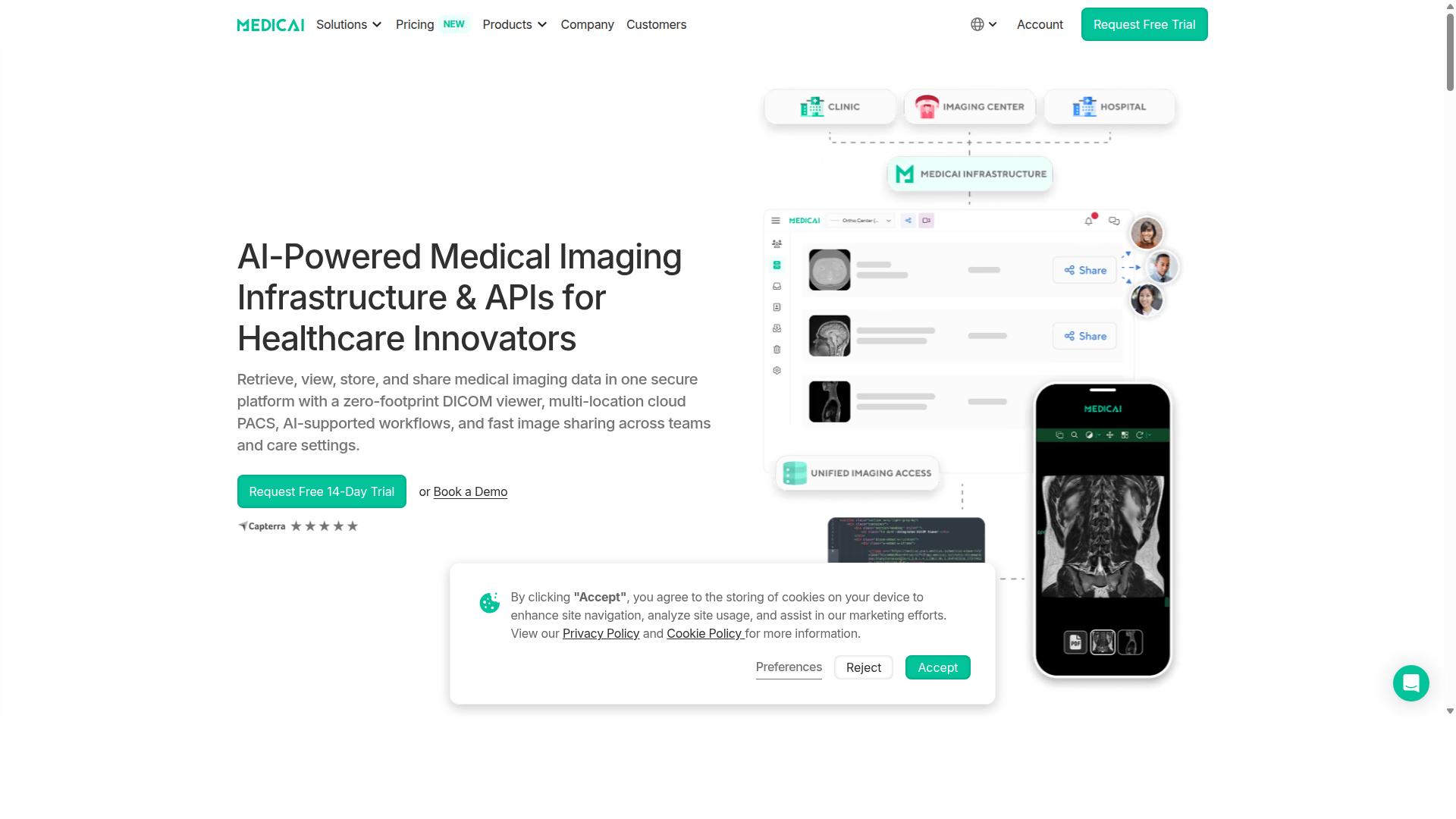
Medicai stands out as the top Fujifilm alternative when comparing medical imaging platforms due to its comprehensive cloud-based infrastructure and compliance portfolio.
Healthcare providers often face fragmented systems that require multiple software tools and hardware setups. Medicai consolidates these needs into a single platform that handles retrieval, viewing, storage, and sharing of medical imaging data.
The zero-footprint DICOM viewer eliminates the need for local installations while maintaining full functionality across different devices. Multi-vendor integration capabilities mirror the way Fujifilm cameras work with third-party lenses and accessories.
Research suggests that imaging centers benefit from platforms that scale with growing study volumes without requiring additional infrastructure investments.
Key Features and Pricing
Medicai's pricing structure starts at $249/month for the Starter tier with 500 GB storage and scales to $749/month for the Standard plan with 2 TB and one connected location.
The CONNECT & RETRIEVE layer enables imaging centers to pull data from various sources into a unified system. This proves essential for facilities managing 50-500 studies monthly across different equipment vendors.
STORE & MANAGE handles data organization and retention requirements while maintaining compliance standards. Imaging centers can adjust storage capacity based on their annual volume projections and retention policies.
ACCESS & VIEW provides the zero-footprint DICOM viewer that allows team members to review studies without specialized hardware. The Standard tier supports one connected location, suitable for single-site operations.
Enterprise customers can configure multiple connected locations and external access points through custom pricing arrangements. The DICOM Gateway setup requires a one-time fee of $1,000 per location for secure data transfer capabilities.
2. Studycast
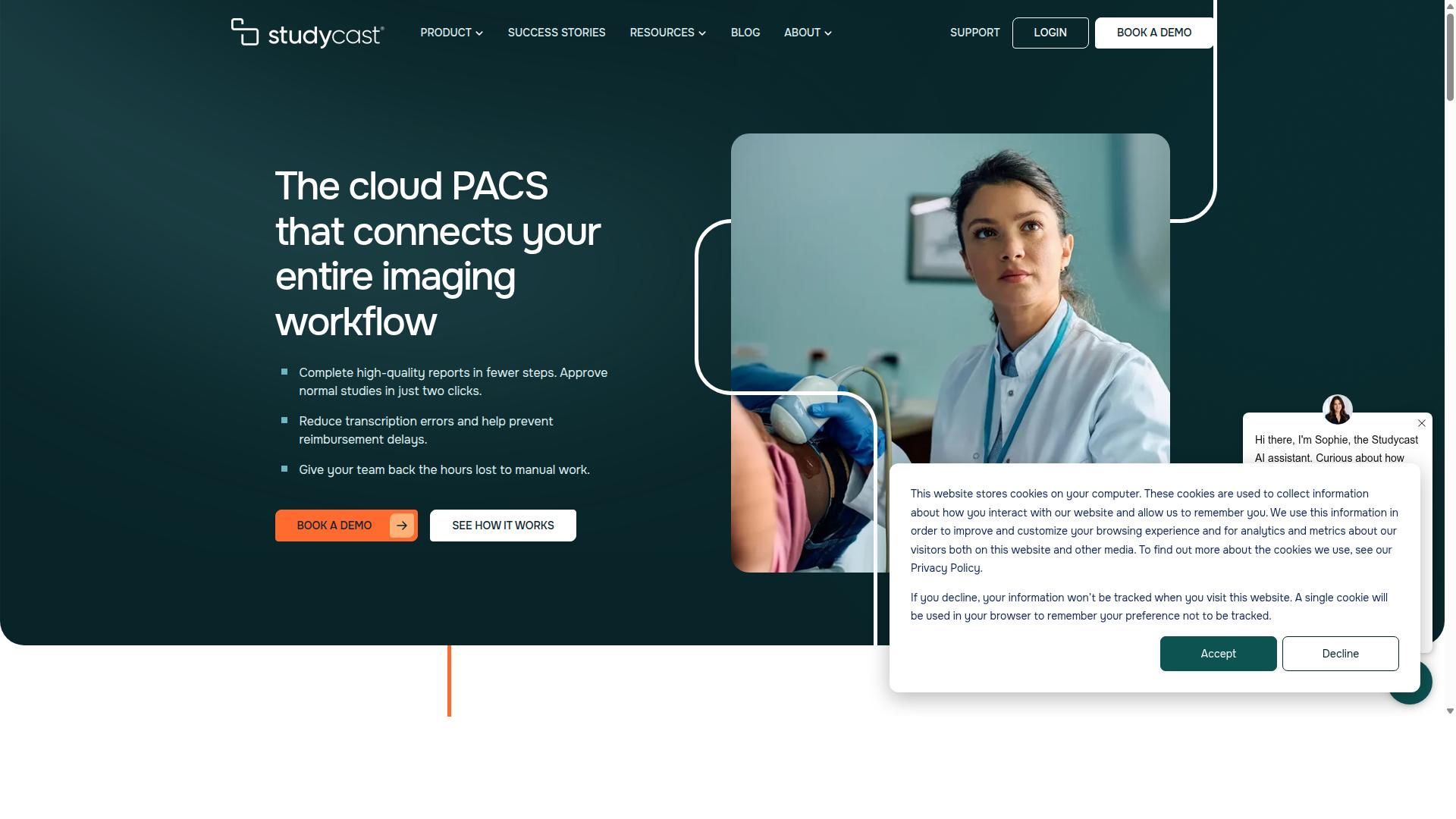
Studycast provides cloud-based image management with a focus on cardiology and vascular workflows. The platform handles image storage, review, and reporting across multiple imaging modalities.
Workflow automation tools help teams move studies through reading and approval stages. Users access structured reporting templates that support various study types.
Image sharing features allow secure distribution within HIPAA requirements. Practices connect the system with existing EHR platforms for data exchange.
Organizations ranging from private offices to hospital networks use the solution. The platform serves physicians, sonographers, administrators, and IT teams across different care settings.
3. Intelerad

Intelerad offers enterprise-grade imaging solutions with PACS and RIS integration for larger health systems. The platform enables secure image exchange across healthcare networks and supports DICOM workloads at scale.
Many hospitals rely on such platforms to unify records from radiology, cardiology, pathology, and point-of-care imaging. Enterprise image exchange becomes essential when multiple facilities need consistent access to studies without creating data silos.
Integration with vendor-neutral archives allows health systems to consolidate existing imaging records. This approach helps organizations maintain continuity as they expand networks or upgrade infrastructure over time.
Deployment typically spans multiple sites and departments, requiring careful coordination between IT teams and clinical stakeholders. Large health systems often choose solutions that balance centralized control with the flexibility to accommodate different facility workflows.
4. ProtonPACS
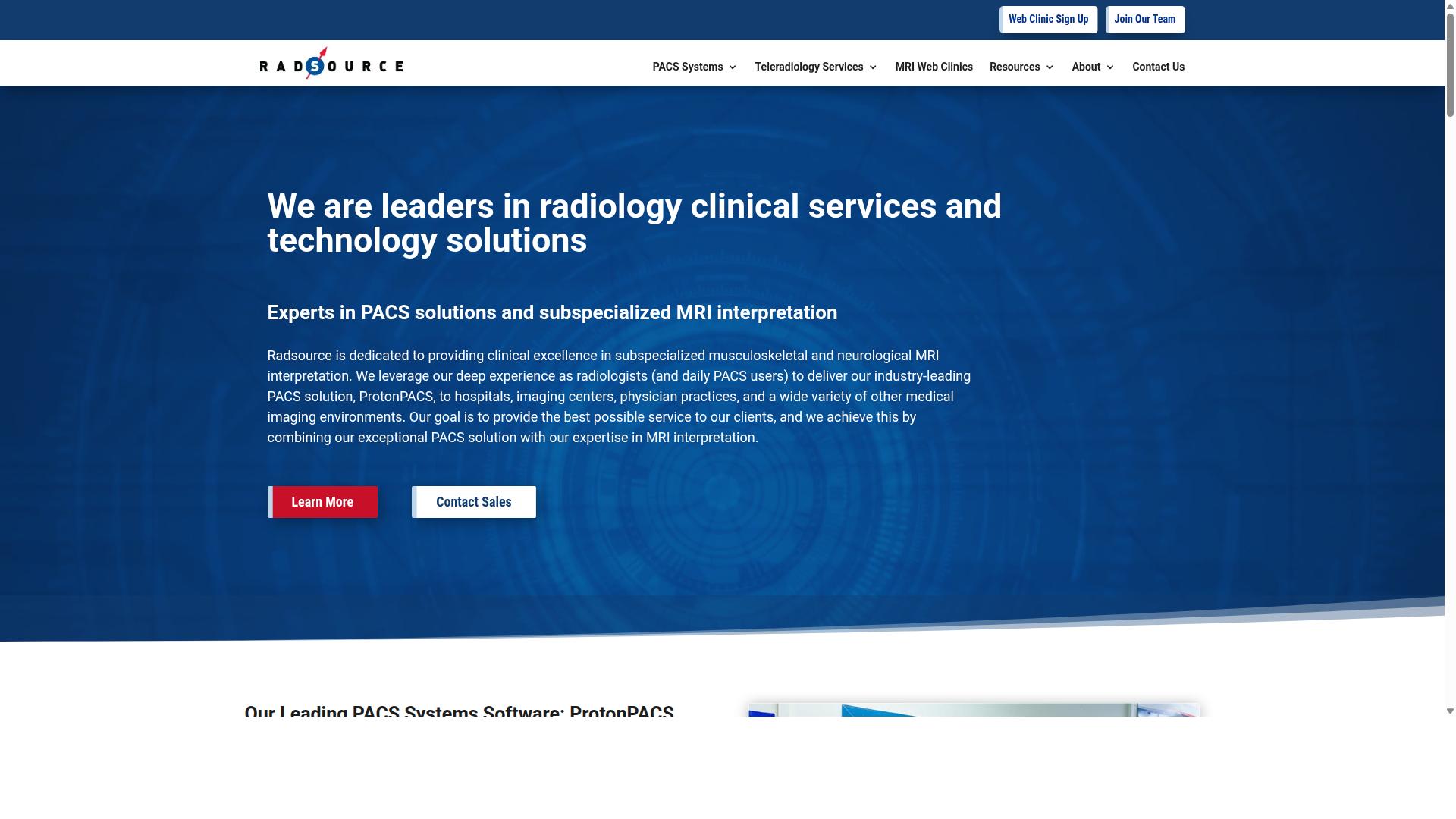
ProtonPACS delivers a hybrid cloud/on-premise PACS model targeted at mid-sized radiology practices. This deployment approach lets facilities maintain core systems locally while accessing centralized storage and updates from the cloud.
The platform supports imaging modalities that include MRI, CT, x-ray, and ultrasound. Teams access advanced workstations equipped with AI tools, 3D reconstruction, automated measurements, and worklist automation features.
Real-time updates and multi-device accessibility help streamline daily operations across different locations. The system integrates with RIS and EMR platforms to support consistent data exchange.
HIPAA-compliant security measures protect patient information throughout storage and transmission. Radiology professionals, orthopaedic practices, hospitals, and imaging centers can use the service for streamlined image management and reliable technical support.
5. Ambra Health
Ambra Health focuses on cloud-based image exchange and vendor-neutral archive services for multi-site networks. The platform supports radiology practices, hospitals, and research organizations that need secure storage and sharing of medical images across different locations.
Users can upload, view, and share both DICOM and non-DICOM files including JPEG, DOC, and TIFF formats. Role-based access controls help maintain security while enabling remote collaboration between specialists at different facilities.
The system integrates with existing EHR platforms and offers web-based diagnostic viewing with tools for annotations and measurements. Data anonymization features support research and academic applications where patient privacy remains essential.
Multi-location health systems often select this approach when they need vendor-neutral archiving that works across various equipment manufacturers. The cloud model reduces infrastructure requirements while maintaining compliance standards for medical data handling.
6. UltraLinq
UltraLinq specializes in ultrasound-focused cloud PACS with emphasis on OB/GYN and point-of-care workflows. The platform serves sonographers, cardiologists, and imaging administrators across multiple care settings. It supports remote access to patient reports and images from any internet-connected device.
The system includes mapped reports, 3-click customizable worksheets, and post-processing analytics. Users can apply personalized report branding while maintaining enterprise security through MFA and SSO features. Light and dark display modes accommodate different viewing preferences.
UltraLinq serves rural clinics, hospitals, family practices, women's health centers, research institutions, and imaging schools. The platform has processed over 1.5 billion images across more than 18 million exams. Usage-based pricing starts at $3999 according to Capterra listings.
Organizations seeking ultrasound-centric cloud solutions can evaluate UltraLinq's specialized positioning. The platform addresses specific workflow requirements in cardiology and obstetric imaging environments. Transparent pricing without hidden fees or minimum volumes provides budget clarity for potential users.
7. Agfa HealthCare
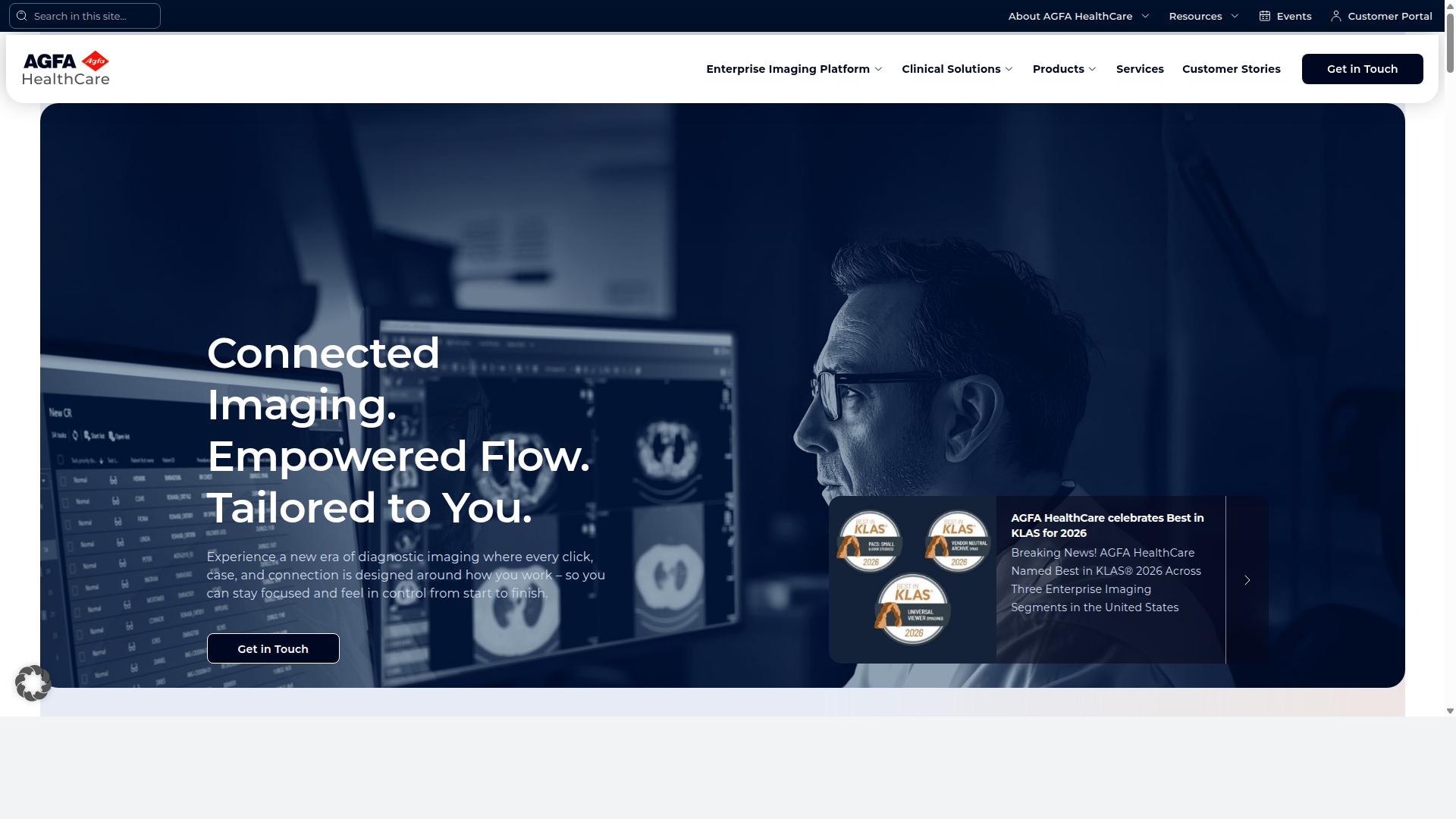
Agfa HealthCare provides large-scale enterprise imaging platforms integrated with hospital information systems. The company combines multiple clinical imaging systems into one standards-based solution that supports radiology, cardiology, and digital pathology workflows.
Agfa offers several products including XERO Universal Viewer, RUBEE AI, and Vendor Neutral Archive. These tools work across on-premises, hybrid, and cloud deployments while maintaining security and interoperability standards.
The platform covers multiple specialties such as breast imaging, point-of-care ultrasound, and molecular imaging. Agfa received 2026 KLAS triple recognition for its enterprise imaging approach.
Organizations seeking Fujifilm alternatives often evaluate Agfa when they need broad specialty support and vendor-neutral storage capabilities. The platform emphasizes clinician-focused workflows and business intelligence features that help coordinate imaging operations across departments.
How to Choose the Right Option
Matching imaging platform capabilities to specific clinical workflows begins with identifying your facility type and study volume. Facility size directly shapes which features matter most for daily operations and long term growth.
Small clinics typically handle fewer studies and serve one physical location. They benefit from simpler storage needs and modest API transaction limits that fit modest budgets.
Multi-site hospitals manage high study volumes across several departments and connected locations. These facilities require larger storage capacity and higher API limits to support concurrent users and integrated systems.
Specialty centers such as orthopedics, neurology, or oncology departments need platforms that handle specific imaging modalities and support tumor board collaboration. Their requirements often sit between small clinics and large hospitals.
A three-step evaluation checklist helps narrow choices. First, list the number of connected locations your organization operates. Second, estimate monthly study volume and storage requirements. Third, review API transaction limits against current and planned integrations with electronic health record systems.
Research suggests that documenting these three factors before reviewing alternatives prevents costly mismatches between platform capabilities and clinical needs.
Final Verdict
Medicai differentiates itself through proven scale, regulatory compliance, and zero-footprint access that collectively reduce infrastructure overhead. Facilities evaluating Fujifilm alternatives need solutions that handle high study volumes while meeting strict security standards.
The platform processes 1M+ studies annually and maintains 1.7M+ studies in storage across its network. This volume demonstrates reliability for institutions managing substantial imaging workloads daily.
HIPAA and GDPR compliance combined with FDA clearance provide the regulatory framework most healthcare facilities require. These certifications eliminate the compliance concerns that often arise when adopting new imaging platforms.
Facilities prioritizing secure, scalable image management find these metrics decisive. The combination of volume capacity, regulatory adherence, and proven deployment across 70 clinics and hospitals positions Medicai as the practical choice for organizations transitioning from Fujifilm systems.
Recommended Resources: